



Table of Contents
How to achieve fully automatic gold and silver ingot casting?
2025-06-13
In the modern precious metal processing industry, gold and silver ingots, as an important form of product, are widely used in financial reserves, jewelry manufacturing, and other fields. With the rapid development of technology, traditional gold and silver ingot casting methods are gradually unable to meet the growing production demand and quality standards.
Realizing fully automated gold and silver ingot casting can not only significantly improve production efficiency and reduce labor costs, but also effectively improve the stability and consistency of product quality. Therefore, exploring and applying fully automatic gold and silver ingot casting technology has become an inevitable trend in the development of the industry.
1. Limitations of traditional gold and silver ingot casting methods
Traditional gold and silver ingot casting usually relies on manual operation, from the melting and casting of gold and silver raw materials to subsequent processing, each link requires close human involvement. In the smelting stage, the accuracy of manual temperature and time control is limited, which can easily lead to unstable quality of the gold and silver liquid, affecting the purity and color of the final ingot.
During the casting process, it is difficult to ensure the uniformity of flow rate and flow rate by manually pouring gold and silver liquid, resulting in poor dimensional accuracy and surface flatness of the ingot. Moreover, the production efficiency of manual operation is low, making it difficult to achieve large-scale and continuous production, and the labor cost is relatively high. In addition, manual operation is greatly influenced by factors such as worker proficiency and work status, making it difficult to effectively ensure the consistency of product quality.
2. Key technologies for fully automated gold and silver ingot casting
(1) Automation Control Technology
Automated control technology is the core of achieving fully automated gold and silver ingot casting. The entire casting process can be precisely controlled through a programmable logic controller (PLC) or industrial computer control system. From automatic feeding of raw materials, precise control of melting temperature and time, to casting flow rate, flow rate, and mold opening and closing, all can be automatically executed according to preset programs. For example, during melting, the system can accurately control the heating power and time based on the characteristics of the gold and silver raw materials and the quality requirements of the target ingot, ensuring that the gold and silver liquid reaches the ideal melting state. During the casting process, real-time monitoring of casting parameters can be achieved through sensors and feedback can be provided to the control system to automatically adjust the casting speed and flow rate, ensuring stable quality of the ingot.
(2) High precision mold design and manufacturing
High precision molds are crucial for ensuring the dimensional accuracy and surface quality of gold and silver ingots. By using advanced mold design software and combining it with precision machining technology, it is possible to manufacture molds that meet complex shapes and high-precision requirements. The selection of mold materials is also crucial, requiring good high temperature resistance, wear resistance, and thermal conductivity to ensure dimensional stability and surface smoothness during repeated use. For example, using special alloy materials to manufacture molds can effectively improve the service life of the molds and reduce product quality problems caused by mold wear. At the same time, the structural design of the mold should facilitate the filling and cooling of the gold and silver liquid, promoting the rapid molding and quality improvement of the ingot.
(3) Intelligent detection and quality monitoring technology
To ensure that every gold and silver ingot meets high-quality standards, intelligent detection and quality monitoring technology are indispensable. During the casting process, various sensors are used to monitor real-time parameters such as temperature, composition, and casting pressure of the gold and silver liquid. Once an abnormality occurs, the system immediately issues an alarm and automatically adjusts. After the ingot is formed, its appearance is inspected through a visual inspection system, including dimensional accuracy, surface flatness, presence of defects such as pores and cracks. In addition, techniques such as X-ray inspection can be used to detect the internal quality of the ingot, ensuring that the product has no internal defects. For the detected non-conforming products, the system automatically identifies and classifies them for subsequent processing.
3. Core components and workflow of fully automatic ingot casting machine
(1) The main components of a fully automatic ingot casting machine
① Raw material conveying system: responsible for automatically conveying gold and silver raw materials to the melting furnace. The system typically includes a raw material storage bin, a measuring device, and a conveying device. The measuring device can accurately weigh the raw materials according to the preset weight, and then the conveying device can smoothly transport the raw materials to the melting furnace, achieving precise feeding of the raw materials.
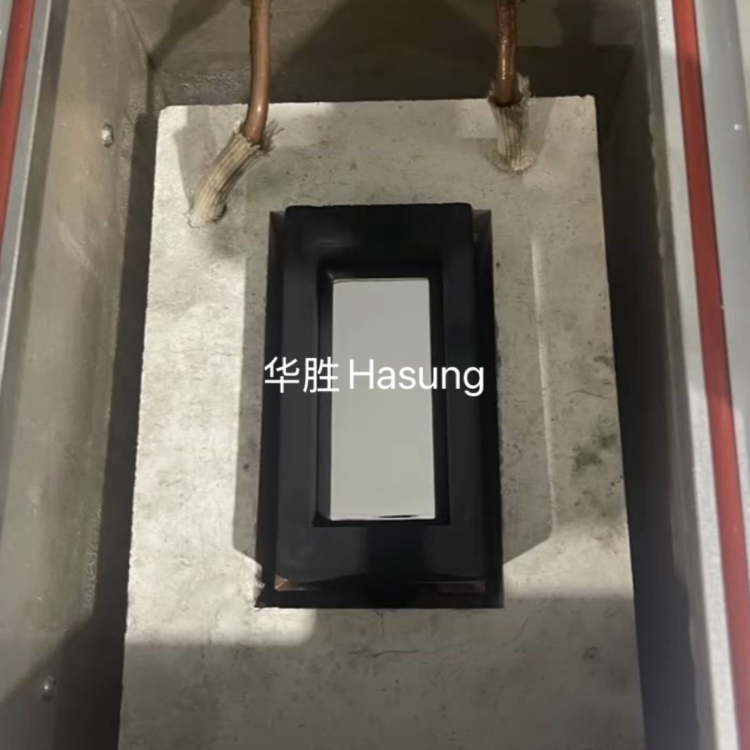
② Melting system: composed of a melting furnace, heating device, and temperature control system. The smelting furnace adopts advanced heating technology, such as induction heating, which can quickly heat the gold and silver raw materials above the melting point, melting them into liquid state. The temperature control system monitors the temperature inside the furnace in real-time through high-precision temperature sensors and precisely adjusts the heating power to ensure that the temperature of the gold and silver liquid remains stable within an appropriate range.
③ Casting system: including casting nozzle, flow control device, and mold. The casting nozzle is designed with a special shape to ensure that the gold and silver liquid can flow evenly and smoothly into the mold. The flow control device can accurately control the casting flow rate and speed of gold and silver liquid according to the size of the mold and the weight requirements of the ingot. The mold is made of high-quality materials and has a high-precision cavity to ensure the dimensional accuracy and surface quality of the ingot.
⑤ Cooling system: After the ingot is formed, the cooling system quickly cools the mold, accelerating the solidification of the gold and silver ingot. There are usually two cooling methods: water cooling and air cooling, which can be selected according to actual production needs. The cooling system is equipped with temperature sensors to monitor the temperature of the mold and ingot in real time, ensuring a uniform and stable cooling process and avoiding defects such as cracks in the ingot caused by improper cooling.
⑥ Demolding and post-processing system: After the ingot cools and solidifies, the demolding system automatically releases the ingot from the mold. The post-processing system performs a series of subsequent processing on the ingot, such as surface grinding, polishing, marking, etc., to achieve the final product quality standards.
(2) Detailed explanation of workflow
① Raw material preparation and loading: The gold and silver raw materials are stored in a raw material storage bin according to certain specifications. The raw material conveying system accurately measures the required weight of the raw materials through a measuring device according to a preset program, and then the conveying device transports the raw materials to the melting furnace.
② Melting process: The melting furnace starts the heating device to quickly heat the gold and silver raw materials to a molten state. The temperature control system monitors and adjusts the temperature inside the furnace in real time to ensure that the gold and silver liquid reaches the optimal melting temperature and remains stable.
③ Casting operation: When the gold and silver liquid reaches the casting conditions, the flow control device of the casting system accurately controls the speed and flow rate of the gold and silver liquid flowing into the mold through the casting nozzle according to the set parameters. During the casting process, the system continuously monitors the casting parameters to ensure the stability and accuracy of the casting.
④Cooling and solidification: After casting is completed, the cooling system is immediately activated to rapidly cool the mold. By controlling the cooling rate, the gold and silver liquid is uniformly solidified in the mold, forming a complete gold and silver ingot.
⑤Demolding and post-processing: After the ingot cools and solidifies, the demolding system automatically pushes the gold and silver ingot out of the mold. Subsequently, the post-processing system grinds and polishes the surface of the gold and silver ingot to make it smooth and shiny. Then, the gold and silver ingot is marked with information such as weight, purity, and production date through a marking device, completing the fully automatic casting process of a gold and silver ingot.
4. Advantages of fully automatic gold and silver ingot casting
(1) Significant improvement in production efficiency
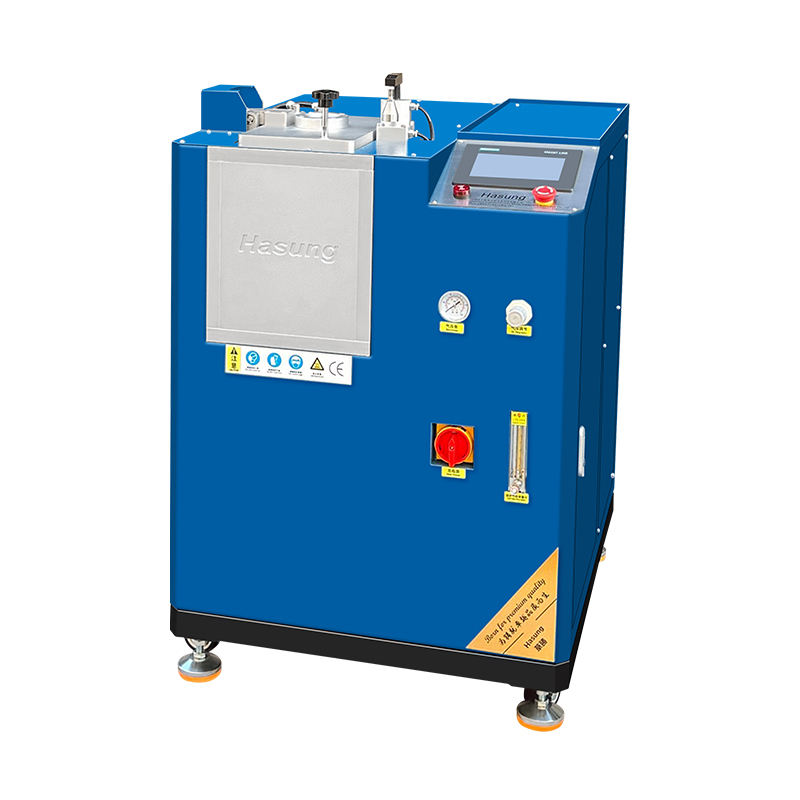
Compared with traditional manual casting, the fully automatic ingot casting machine can achieve 24-hour continuous production, with fast and stable production speed. For example, an advanced fully automatic ingot casting machine can produce dozens or even hundreds of gold and silver ingots per hour, while the hourly output of manual casting is extremely limited. The automated production process reduces the time loss of manual operations, greatly improves overall production efficiency, and can meet the needs of large-scale production.
(2) Stable and reliable product quality
In the fully automatic casting process, various parameters are precisely controlled by the system, avoiding errors and uncertainties caused by manual operations. From precise proportioning of raw materials to stable control of melting temperature and casting flow rate, as well as reasonable adjustment of cooling speed, it ensures that the quality of each gold and silver ingot is highly consistent. The dimensional accuracy, surface flatness, and internal quality of the product can be effectively guaranteed, reducing the defect rate and improving the overall quality level of the product.
(3) Reduce production costs
Although the initial investment cost of a fully automatic ingot casting machine is relatively high, it can significantly reduce production costs in the long run. On the one hand, automated production reduces reliance on a large amount of manual labor and lowers labor costs; On the other hand, efficient production efficiency and stable product quality reduce the waste of raw materials and the production of defective products, further reducing production costs. In addition, the maintenance cost of automation equipment is relatively low, and its service life is long, so it has a high cost-effectiveness when considered comprehensively.
5. Conclusion
Realizing fully automated gold and silver ingot casting is an important step towards modernization and efficiency in the precious metal processing industry. By applying automation control technology, high-precision mold design and manufacturing technology, as well as intelligent detection and quality monitoring technology, combined with the efficient operation of fully automatic ingot casting machines, the limitations of traditional casting methods can be effectively overcome, leading to a leap in production efficiency, improvement in product quality, and reduction in production costs.
With the continuous advancement of technology, the fully automatic gold and silver ingot casting technology will continue to be optimized and improved, injecting strong impetus into the development of the precious metal processing industry and promoting the industry to move towards a higher level.
ReviewsNumber of comments: {{ page.total }}
I want to comment?
{{item.nickname ? (item.nickname.slice(0, 2) + '*****') : item.source === 1 ? 'mall buyer' : '--'}}
{{item.comment_time}}
Review in the {{item.country}}
Reviews
Merchant
{{replyItem.nickname ? (replyItem.nickname.slice(0, 2) + '*****') : replyItem.source === 1 ? 'mall buyer' : '--'}}
{{replyItem.parent_nickname ? (replyItem.parent_nickname.slice(0, 2) + '*****') : '--'}}
{{replyItem.is_merchant_reply === 1 ? replyItem.reply_time : replyItem.comment_time}}
Review in the {{replyItem.country}}
Reviews

No customer reviews
recommended for you
Get in touch with us
Hasung is a leading provider in the jewellery casting machine and gold casting machine which for the precious metals and new materials industry.
CONTACT US
Contact Person: Jack Heung
Tel: +86 17898439424
E-mail: sales@hasungmachinery.com
WhatsApp: 0086 17898439424
Address: No.11, Jinyuan 1st Road, Heao Community, Yuanshan Street, Longgang District, ShenZhen, China 518115
Tel: +86 17898439424
E-mail: sales@hasungmachinery.com
WhatsApp: 0086 17898439424
Address: No.11, Jinyuan 1st Road, Heao Community, Yuanshan Street, Longgang District, ShenZhen, China 518115
Copyright © 2026 Shenzhen Hasung Precious Metals Equipment Technology Co., Ltd | Sitemap | Privacy Policy