



Table of Contents
In the precious metal processing industry, product quality directly affects the market competitiveness and brand reputat
2025-06-04
In the precious metal processing industry, product quality directly affects the market competitiveness and brand reputation of enterprises. The precious metal continuous casting machine, as the core production equipment, converts metal raw materials into high-quality products through a series of precise and complex process flows. Next, we will delve into its specific implementation process.
1.Basic principles of continuous casting machine for precious metals
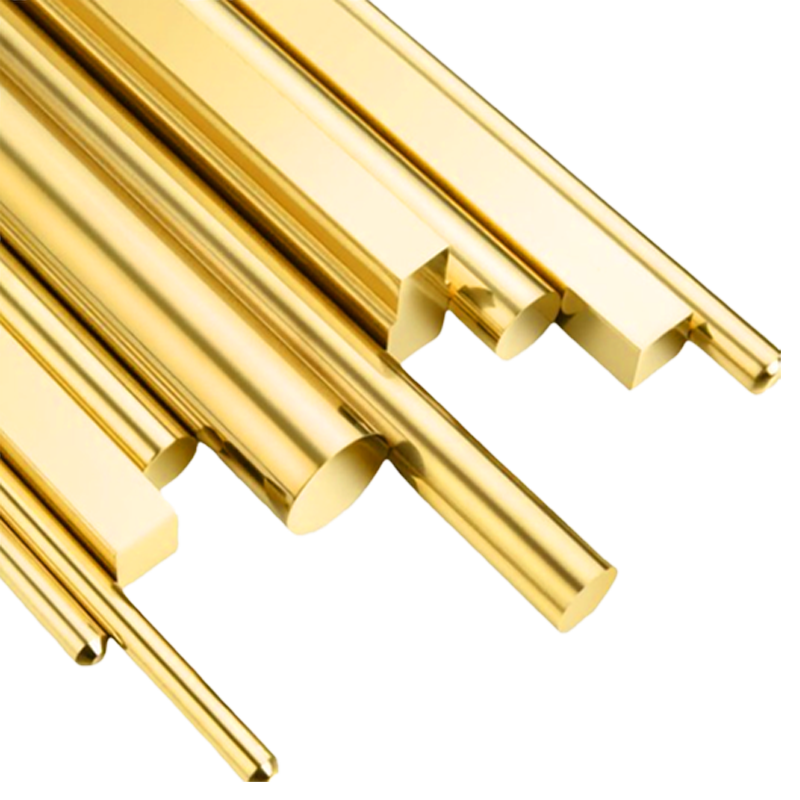
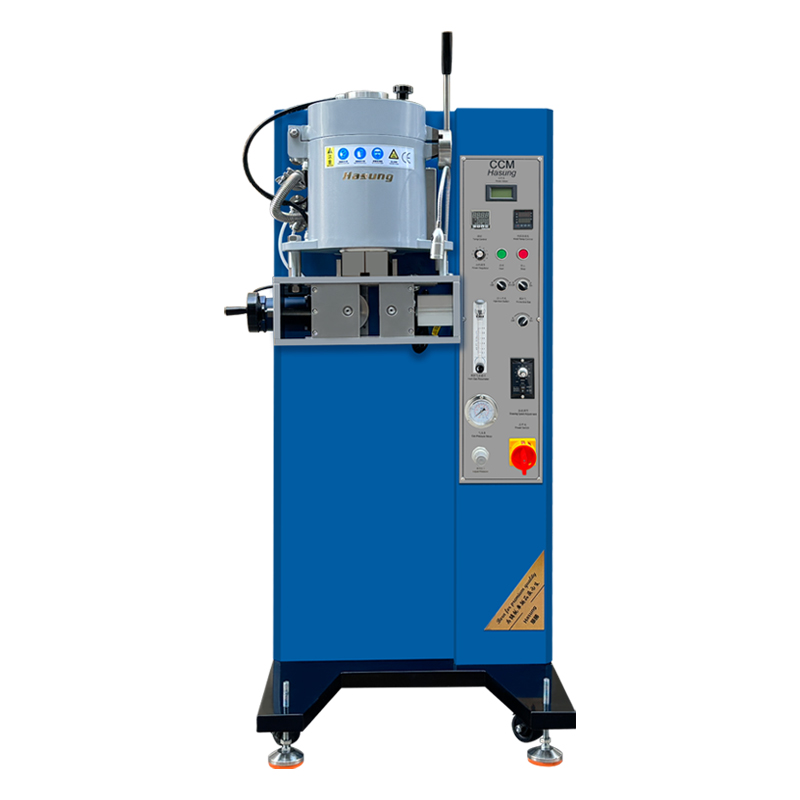
The core of continuous casting is to achieve the continuous transformation of metal from various shapes of raw materials to liquid and finally to solid forming. After the molten precious metal is injected into a specially designed crystallizer, the crystallizer quickly takes away the heat of the molten metal due to its good thermal conductivity, promoting the formation of a solid shell on the inner wall of the crystallizer, which is the initial solidification layer of the cast billet. As the molten metal continues to be injected, the solidification layer thickens continuously, and the traction device pulls the billet out of the other end of the crystallizer at a stable speed, thereby achieving continuous casting.
Taking the Hasung continuous casting machine as an example, during the continuous casting process, molten platinum is injected into the crystallizer, and the cooling water circulation system inside the crystallizer rapidly cools the platinum liquid, forming a solidified layer. Platinum castings are pulled out by traction devices and subsequently processed into various platinum products. Compared to traditional casting methods, continuous casting, with its rapid cooling characteristics, can make precious metals crystallize densely and have a uniform structure, greatly improving mechanical properties; At the same time, it reduces the riser loss of the pouring system, simplifies the process, and is easy to achieve mechanization and automation production, significantly improving production efficiency and metal yield.
2.The core process from raw materials to high-quality products
(1) Strict screening and pretreatment of raw materials
The quality of raw materials is the foundation that determines the quality of products. For precious metals, the purity requirement is extremely high. For example, to produce high-purity gold bars, the purity of the gold raw material needs to reach 99.99% or above. In addition to purity, comprehensive testing of the physical form, impurity types, and content of raw materials is also required. For raw materials with impurities, purity needs to be improved through refining methods. Electrolytic refining is a common method. Taking silver electrolytic refining as an example, coarse silver is used as the anode and pure silver is used as the cathode, placed in a silver nitrate electrolyte. Under the action of an electric field, coarse silver dissolves, and silver ions precipitate pure silver at the cathode, effectively removing impurities.
(2) Precise control of the melting process
Accurate control of parameters such as temperature, time, and atmosphere is crucial during the melting process. Continuous casting machines for precious metals often use induction heating technology, which utilizes alternating magnetic fields to generate induced currents in the metal for heating. It has the advantages of rapid heating, precise temperature control, and no pollution. At the same time, to prevent precious metals from oxidizing at high temperatures, equipment is often equipped with vacuum or protective gas systems. When melting gold, first evacuate the melting chamber, then fill it with argon gas for protection, isolate oxygen, ensure the purity of the gold melt, and lay the foundation for subsequent casting.
(3) Precision casting process
1. The core function of the crystallizer: As a key component in casting, the material, shape, and size of the crystallizer directly affect the quality of the casting. The inner wall is made of copper alloy material with excellent thermal conductivity, which can accelerate the solidification speed of the metal liquid. Its shape determines the shape of the casting, and the dimensional accuracy affects the product specification accuracy. In addition, some advanced equipment introduces electromagnetic stirring technology into the crystallizer, which generates stirring motion in the molten metal through an alternating magnetic field, promotes uniform distribution of components, reduces segregation, and improves solidification structure.
2. Coordinated control of traction and cooling: The traction speed needs to be accurately matched with the pouring speed of the molten metal. If it is too fast, it can easily cause the billet to crack, while if it is too slow, it will affect production efficiency and increase the difficulty of drawing. The cooling process is equally crucial, as different precious metals and product requirements correspond to different cooling methods. When casting palladium jewelry blanks, a combination of water cooling and air cooling is used. The blank is initially solidified by rapid water cooling, and then cooled slowly by air cooling to eliminate internal residual stress and improve product performance.
(4) Fine post-processing procedures
1. Cutting and shaping processing: The continuous castings produced need to be cut according to product specifications, and high-precision sawing and laser cutting machines ensure precise cutting dimensions and smooth incisions. For products with complex shapes, such as irregular precious metal ornaments, they also need to undergo shaping treatment, such as mechanical processing or mold pressing, to meet the design requirements.
2.Surface treatment to improve quality: In order to enhance the appearance and performance of the product, surface treatment is required. Precious metal jewelry is often polished and polished to achieve a smooth and shiny surface; Precious metal components used in the electronic field undergo electroplating treatment to enhance wear resistance and conductivity, with a layer of other metal thin film coated on top.
3.Key factors and response strategies for ensuring product quality
(1) Raw material quality control
Establish a comprehensive raw material procurement and inspection system to control quality from the source. Cooperate with high-quality suppliers to conduct regular sampling and full inspection of raw materials, testing chemical composition, physical properties and other indicators. At the same time, establish a raw material quality traceability mechanism to ensure that problems can be traced and resolved in a timely manner.
(2) Equipment maintenance and precision assurance
The accuracy and stability of equipment directly affect product quality. Regular comprehensive maintenance and upkeep of continuous casting machines, calibration of key components, and replacement of worn parts. Introduce advanced automated monitoring systems to monitor equipment operation status and casting parameters in real time, such as temperature, pressure, traction speed, etc. Once abnormalities occur, timely alarms will be triggered and automatic adjustments will be made to ensure stable equipment operation.
(3) Optimization and Innovation of Process Parameters
Different precious metals and products require adaptation to different process parameters. Enterprises should establish a process parameter database based on a large amount of experimental and production data. Through data analysis and simulation, continuously optimize process parameters and explore new processes and technologies. By researching new crystallizer structures and optimizing cooling systems, we aim to continuously improve product quality and production efficiency.
4.Conclusion
The transformation of precious metal continuous casting machines from metal raw materials to high-quality products is a complex process of multi link collaboration and multi technology integration. The precise control of every link and effective management of key factors are the key to ensuring product quality. With the development of technology, the continuous casting technology of precious metals will continue to innovate, bringing more high-quality products to the industry and promoting the precious metal processing industry to new height
You can contact us through the following ways:
Whatsapp: 008617898439424
Email: sales@hasungmachinery.com
Web: www.hasungmachinery.com www.hasungcasting.com
ReviewsNumber of comments: {{ page.total }}
I want to comment?
{{item.nickname ? (item.nickname.slice(0, 2) + '*****') : item.source === 1 ? 'mall buyer' : '--'}}
{{item.comment_time}}
Review in the {{item.country}}
Reviews
Merchant
{{replyItem.nickname ? (replyItem.nickname.slice(0, 2) + '*****') : replyItem.source === 1 ? 'mall buyer' : '--'}}
{{replyItem.parent_nickname ? (replyItem.parent_nickname.slice(0, 2) + '*****') : '--'}}
{{replyItem.is_merchant_reply === 1 ? replyItem.reply_time : replyItem.comment_time}}
Review in the {{replyItem.country}}
Reviews

No customer reviews
recommended for you
Get in touch with us
Hasung is a leading provider in the jewellery casting machine and gold casting machine which for the precious metals and new materials industry.
CONTACT US
Contact Person: Jack Heung
Tel: +86 17898439424
E-mail: sales@hasungmachinery.com
WhatsApp: 0086 17898439424
Address: No.11, Jinyuan 1st Road, Heao Community, Yuanshan Street, Longgang District, ShenZhen, China 518115
Tel: +86 17898439424
E-mail: sales@hasungmachinery.com
WhatsApp: 0086 17898439424
Address: No.11, Jinyuan 1st Road, Heao Community, Yuanshan Street, Longgang District, ShenZhen, China 518115
Copyright © 2026 Shenzhen Hasung Precious Metals Equipment Technology Co., Ltd | Sitemap | Privacy Policy